
Key takeaways
- Atlas’s Agentic AI Hackathon with Alibaba Cloud surfaced a new builder archetype: people outside the travel industry building travel tools to solve their own problem, with no intention of becoming an OTA.
- AI is making niche, single-community travel products easier to prototype and test — the next step is proving they can work commercially, not just technically.
- Getting access to real travel infrastructure (flight search, fares, booking) is a key bottleneck alongside payments, servicing and distribution — which is why Atlas opened self-service access to get started faster.
- Atlas’s role is to make reliable travel data and capabilities accessible alongside tools that help builders interpret and act on them, not to decide what every builder should do with the data.
- AI could broaden the number of customer-facing travel products, even as those products continue to rely on the same shared infrastructure providers — enterprise investment keeps that infrastructure deep and reliable, while easier access broadens who can use it.
A few months ago, we opened Atlas to more builders. We introduced self-service registration and sandbox access, published our subscription plans and made it easier for developers to start testing with real airline infrastructure.
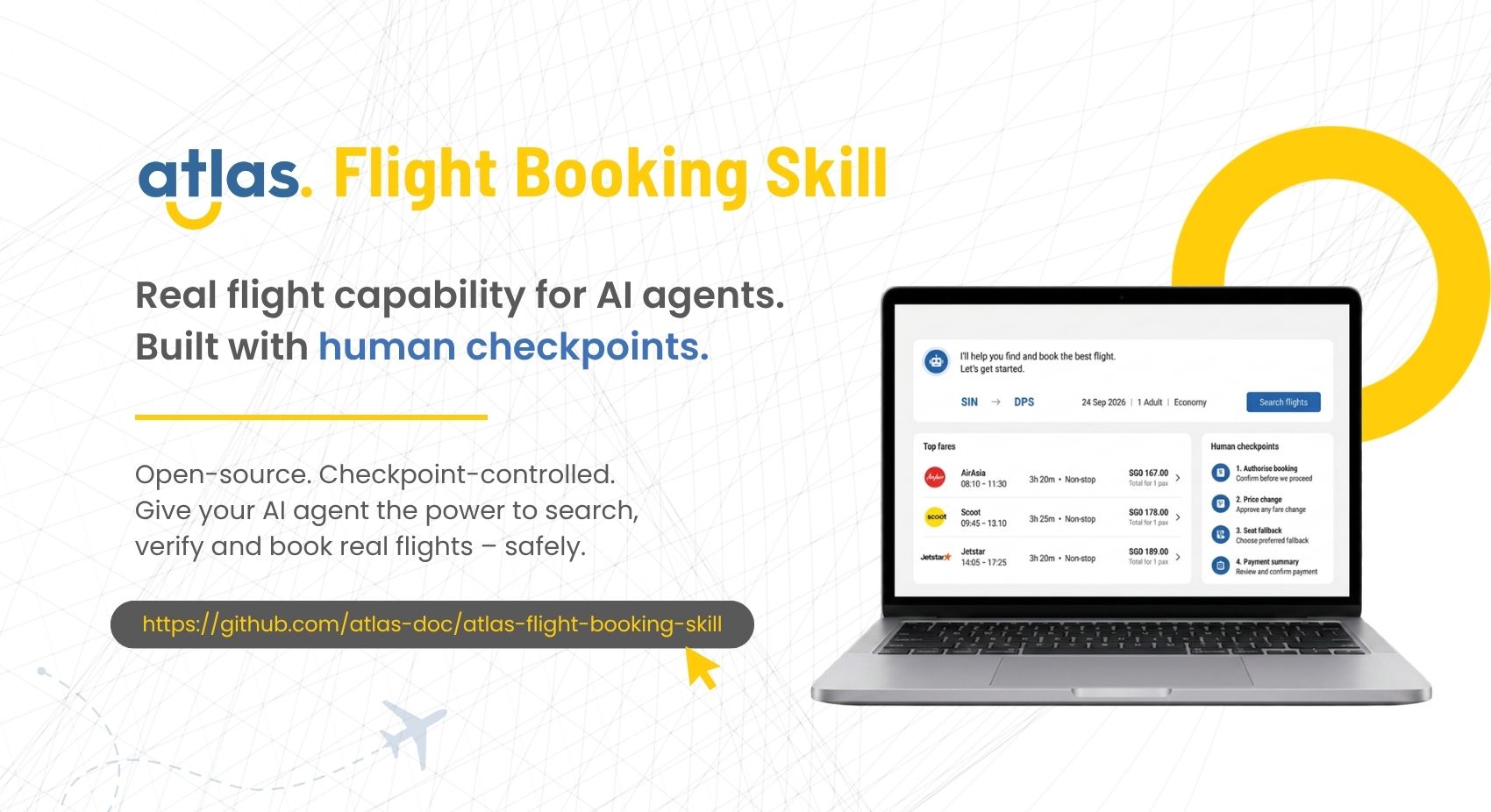
Then we open-sourced the Atlas Flight Booking Skill, giving AI builders another way to connect live flight search, fare verification and booking into what they were creating.
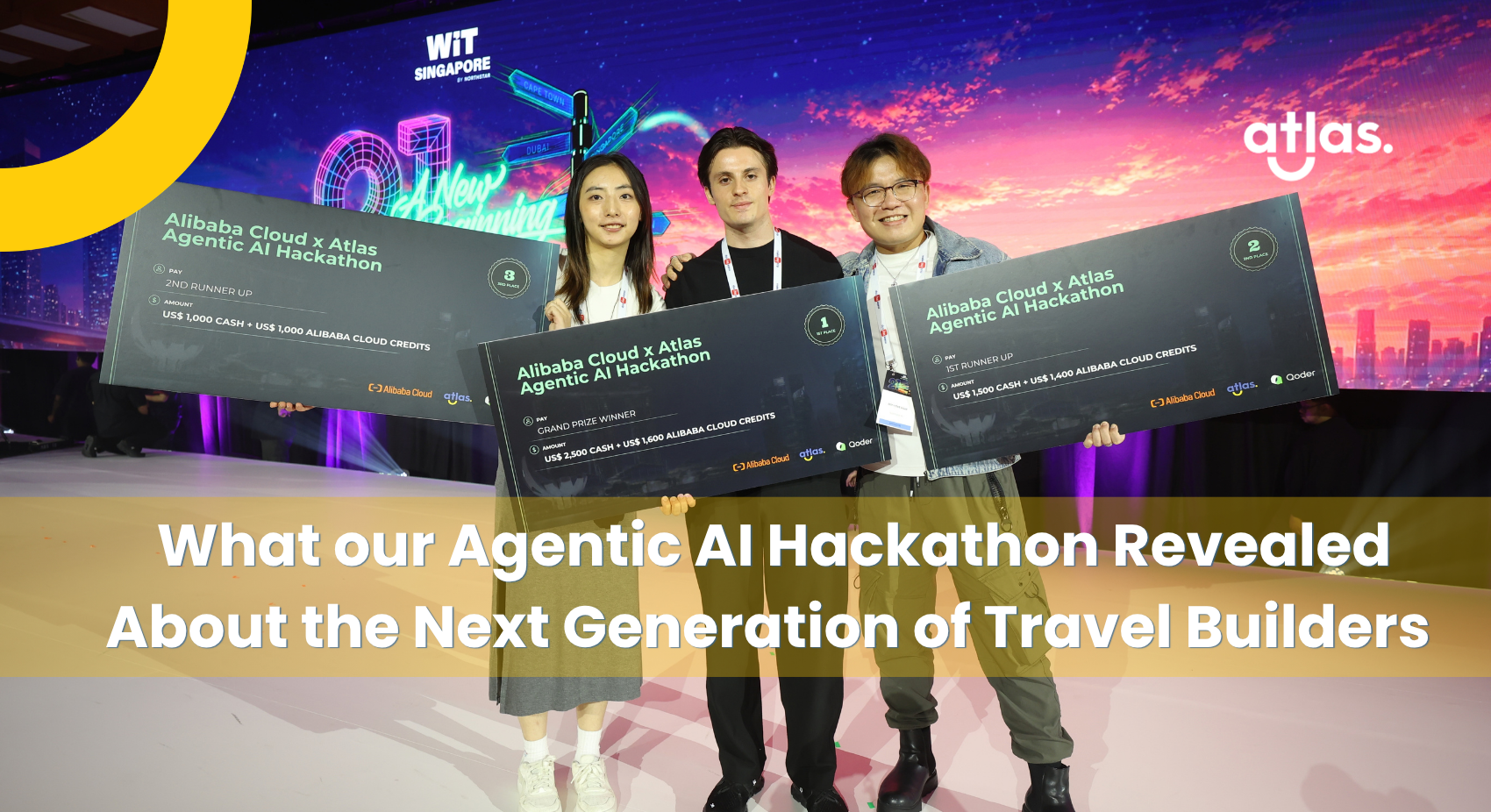
We did this because we believed a new generation of travel products would be built by a much broader group of people. The Alibaba Cloud x Atlas Agentic AI Hackathon brought that belief to life and challenge us to think bigger. 400+ applications, 150 selected, 46 teams submitted their projects, and by the time the Top 3 finalists were revealed in Singapore, we realised something: we have been thinking about the new generation of Travel Sellers too narrowly.
What if the next Travel Seller doesn’t want to be a Travel Seller?
The three winning teams came from very different backgrounds. Victor Gaya built GlobePlanner, Hset Min Htet built Northstar AI, and JK Sim and Yuhan built YuanFen.
None of them work in travel, and none of them have the ambition to build another OTA. They started with actual problems they had experienced themselves: planning a trip, handling travel disruptions, removing friction from a journey, and used AI to make it easier.
That sounds simple, but it raises a bigger question for travel distribution. What if the next generation of travel products is not primarily created by travel companies?
A developer might build something for a group of friends. A sports community might create an agent for members travelling to tournaments. A company might build something specifically for employees. Someone may build a product for 100 people with a very specific travel need.
They may never raise funding, become an OTA or even call themselves a Travel Seller. They may simply build something useful.
Until recently, that would have been difficult to justify. Now it is becoming much more possible.
AI doesn’t just lower the cost of building companies
When people talk about AI and startups, the conversation often jumps straight to scale. What is the next billion-dollar company? Which existing platform gets disrupted? Which business model can grow fastest?
But one of the more interesting possibilities is much smaller.
AI is making it increasingly realistic to build products that would previously have been too niche, or too expensive to justify creating. A travel product does not necessarily need millions of users; it may only need to work extremely well for one community, one use case or one recurring travel need.
That changes the economics of experimentation. It also changes who gets to participate.
Ten years ago, building even a basic travel product required substantial engineering resources, capital and time. Today, a small team can move from idea to working prototype in days.
That does not make travel simple. It changes where the difficult part sits.
Building the interface is getting easier. Getting access to travel is still a challenge.
A developer can build an application, agent or interface in days. Then they try to make it actually do something.
Can it search real flights, and verify that the fare is still available? Can it understand airline products and ancillaries? Can it make a booking? Can it handle what happens afterwards?
This is where the complexity returns.
Travel infrastructure was built for an industry where access usually came after commercial discussions and enterprise onboarding — which made sense for established travel businesses but makes less sense for someone testing an idea over a weekend.
If building the application takes three days but getting access to the underlying infrastructure takes three months, the infrastructure becomes the constraint.
That is one of the reasons we opened Atlas, and meeting the hackathon teams only reinforced it.
Fresh eyes see different problems
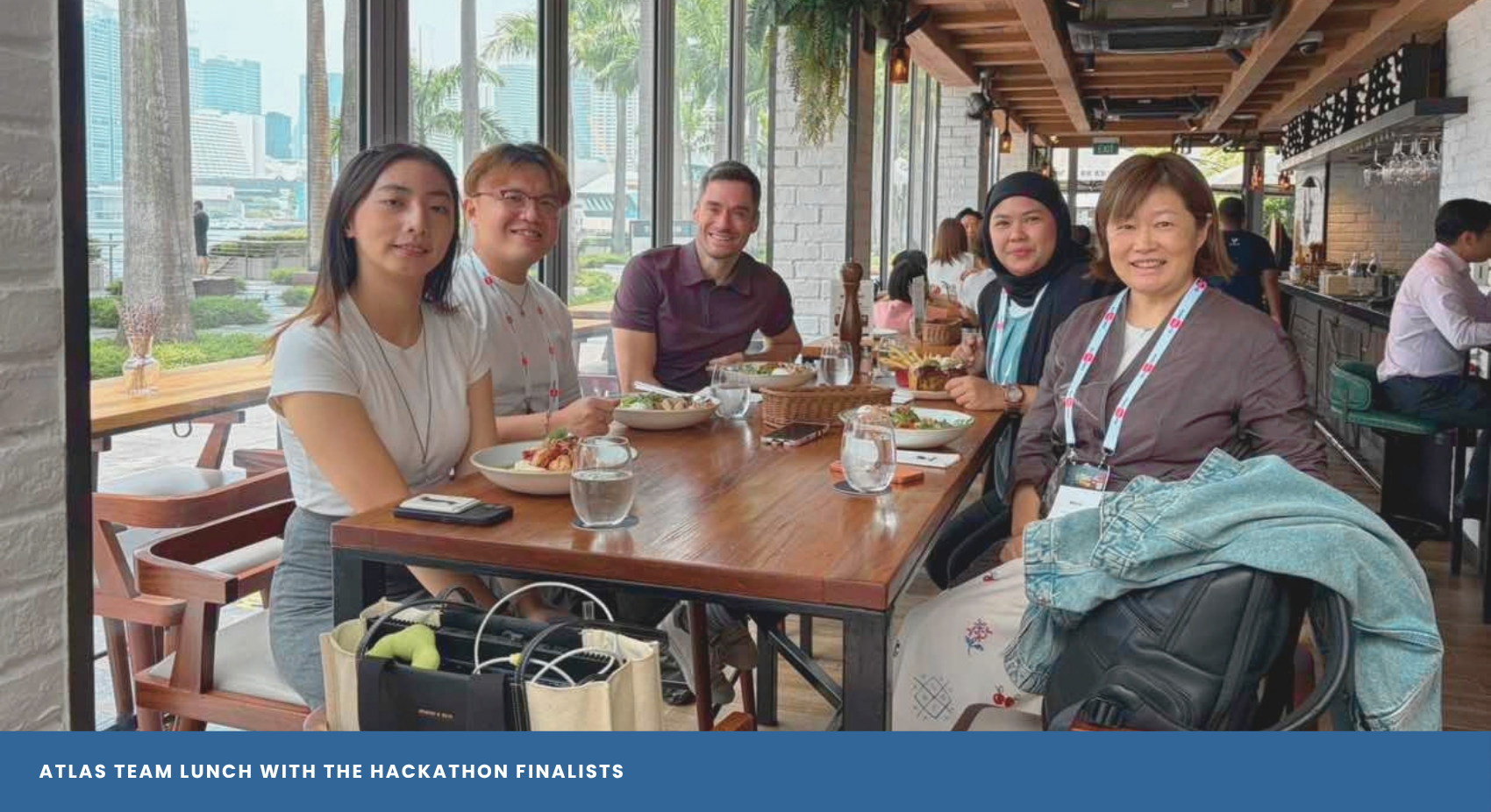
There was another pattern that stood out during the hackathon. Some participants had strong travel-domain knowledge, but some of the most interesting propositions came from people outside the industry.
That does not mean domain expertise is a disadvantage. Travel is complicated for good reasons. Airline rules, payments, servicing, ticketing, ancillaries and operational reliability all require deep knowledge.
Someone who has spent years in travel may ask, “How can we improve this process?” Someone outside travel may ask, “Why is this process here at all?”
That difference matters.
The finalists were not thinking first about distribution models, legacy workflows or how travel products are normally built. They were thinking about the traveller and working backwards from the problem.
For an industry that talks constantly about customer experience, there is something useful in that.
Builders don’t want to be told how to build
The hackathon also reinforced something else: there will not be one technical interface for the future of travel.
Some developers will use APIs directly. Some will build agents. Some will work with Skills. Others will use MCP, new protocols or tools that have not yet emerged. Many will combine several approaches.
The technology at the top of the stack will keep changing. Infrastructure providers should not force builders to choose a particular interface simply because that is how the infrastructure was originally designed.
What matters is what sits underneath: reliable airline content, accurate pricing, product information, booking, payments, fulfilment and servicing.
An interface can change completely — it’s the infrastructure’s job to keep up and stay accessible to builders.
Maybe our job is not to provide the insight
This was one of the more important questions the hackathon raised for us.
Travel technology companies have historically tried to package data into predefined insights. We decide what matters, analyse it, and tell the customer what it means.
But AI changes that relationship.
The same underlying data can mean something completely different depending on who is asking the question. One builder might want to understand whether six friends can travel together at a reasonable fare. Another might want to understand how prices tend to move before departure. Another may combine airline data with weather, events, maps or public information to make a completely different decision.
Atlas cannot anticipate every question a builder will ask. Our role is to make reliable travel data and capabilities accessible, alongside tools that help customers interpret and act on them. Builders can then combine Atlas infrastructure with their own context, intelligence and user experience.
The future of travel distribution may become more fragmented, not less
For years, travel technology has moved towards consolidation. Large platforms aggregate more supply, companies try to own more of the customer journey, and everyone wants the traveller to remain inside their ecosystem.
AI could push in another direction.
A traveller’s agent may be able to move horizontally across different services. A community could have its own interface. A niche product could use infrastructure from several providers without needing to become a large travel platform itself.
That does not mean the established travel industry disappears. Large travel businesses will continue to serve huge numbers of customers. Airlines will continue to control their inventory. OTAs, aggregators and technology platforms will continue to play important roles.
But they may increasingly sit alongside a much larger number of smaller builders.
Some will become companies; others will remain communities or one-off experiments that disappear once they’ve served their purpose.
The interesting part is that they can exist at all, together.
Enterprise and the builders coming next
For Atlas, enterprise partners and new builders are both central to our future.
Our enterprise partners need scale, broad airline coverage, reliability, fulfilment and servicing. New builders need many of the same capabilities—with a simpler, faster path from idea to launch.
Our direction is clear: strengthen the infrastructure established travel businesses depend on, while making it easier for developers, AI-native businesses and independent builders to turn their ideas into working products.
Different starting points. The same strong foundation.
We opened the door. The hackathon showed us who might walk through it.
When we opened Atlas, we believed that the next generation of travel products would come from a much broader group of people than the industry had traditionally served.
The hackathon strengthened that belief — and expanded our understanding of who those builders could be.
Among them could be the founder of the next major travel company, or some one who simply saw a problem worth solving and never set out to build a travel business.
We cannot know which ideas will grow into large businesses. Our role is to give more people the foundation to build and the opportunity to find out.
Our job is not to decide who gets to build. Our job is to make sure the infrastructure is there when they do.
Explore Atlas’s LCC retailing and fulfilment infrastructure →