
The Industry Solved Finding Flights. Atlas Solves Issuing Them.
Finding a flight is no longer the hard part. Search is fast. Fares are accessible. Comparison is commoditised across platforms.
The hard part comes after the customer clicks “Book.”
A payment is completed. The order enters the system. Then somewhere between your platform, your payment provider, and the airline connection, the booking doesn’t confirm. You find out minutes later — or worse, when the customer contacts support.
A customer doesn’t remember how fast your search results loaded. They remember whether their booking worked.
That is the problem Atlas Fulfilment API is built to close.
What Is Atlas Fulfilment API?
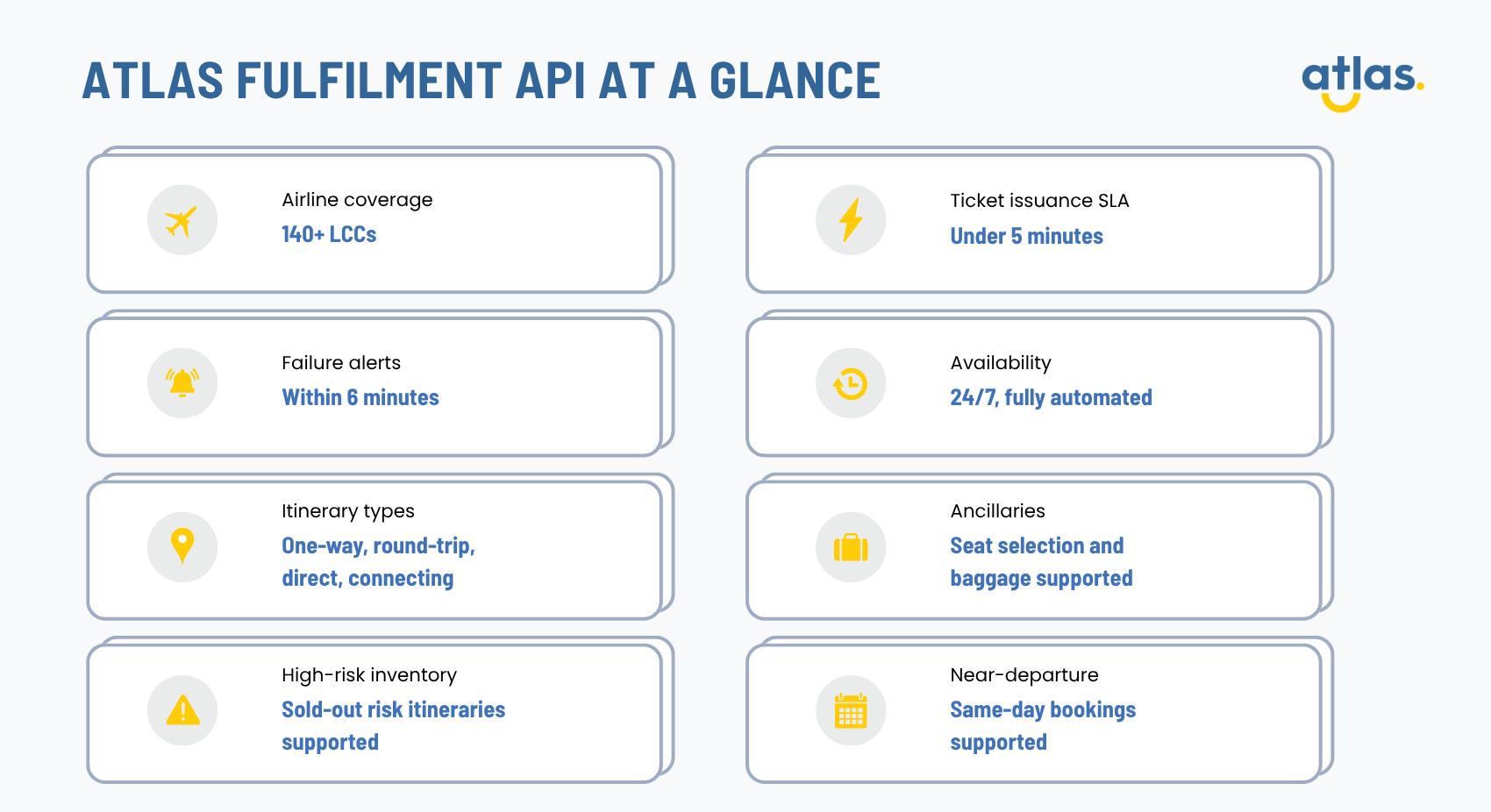
Atlas Fulfilment API is a dedicated order execution layer. It operates independently of your search system, your frontend, and your payment infrastructure. You pass in an order — Atlas issues the ticket. The entire flow completes in under five minutes, 24 hours a day, seven days a week.
This is not a search API and not a comparison tool. It’s execution infrastructure — the layer that takes a confirmed order and turns it into a ticket, reliably, at scale.
How it works in practice:
- A Travel Seller sources fares from its own search and shopping stack.
- A customer confirms the booking.
- The Travel Seller submits the order to Atlas Fulfilment API.
- Atlas validates availability and issues the ticket within five minutes, returning confirmation.
- If anything fails, the Travel Seller is alerted within six minutes — with enough detail to act before the customer finds out.
- Post-booking, the same workflow covers seat selection, baggage, VOID, and refunds.
Why Execution Is the Next Competitive Frontier
Travel Sellers access fare data in many different ways — GDSs, proprietary fare caches, metasearch engines, or an end-to-end retailing platform such as Atlas. As a result, competing on price alone is becoming harder. Fare availability and pricing are now largely comparable across platforms.
The real opportunity lies in execution. What drives customer loyalty, repeat business, and healthier margins isn’t just finding the right fare — it’s confirming the booking and supporting the customer afterwards.
Execution failures are expensive. A single failed booking can trigger:
- Customer compensation
- Manual intervention
- Rebooking at a higher fare
- Lost margin
- Additional support costs
Multiply that across hundreds of orders a day, and the cost becomes structural, not incidental.
Relying on one supplier for both search and fulfilment creates real risk:
- A single point of failure across your booking flow
- Limited airline back-up when a carrier connection fails
- In some cases, manual operations that shouldn’t exist in 2026
Atlas Fulfilment API decouples execution from shopping. Source fares wherever you choose, then rely on Atlas to fulfil and service the booking through direct airline connections and automated workflows. Even if your systems experience an outage, fulfilment requests already submitted to Atlas continue to process — and if something can’t be completed, you’re alerted within six minutes.
Most ticketing APIs are extensions of a search product, which means they share the same points of failure. Atlas Fulfilment API is built differently: execution is available as a standalone capability, decoupled from search, designed to sit alongside whatever shopping infrastructure you already have.
Four Things That Make It Different
Independent execution — 24/7, zero human intervention
Once an order is submitted, Atlas handles ticket issuance automatically. No manual queues, no overnight backlogs, no dependency on your system’s availability. If ticketing fails, you receive an alert within six minutes — enough information to act, not to troubleshoot blind.
Direct connections to 140+ LCCs. One integration.
Every carrier has its own ticketing rules, payment flows, ancillary processes, inventory behaviour, and error handling. Atlas has spent years building airline-specific fulfilment workflows across 140+ LCCs and consolidating that complexity into a single API — so Travel Sellers get fast, reliable fulfilment without managing airline-by-airline complexity themselves.
Bring your fare. No search dependency. No sold-out risk purchase restrictions.
You don’t need Atlas Search to use Fulfilment API. Bring fares from your own GDS, metasearch cache, or proprietary cache — Atlas verifies and issues. Sold-out risk itineraries and near-departure flights are supported. These bookings typically carry higher fulfilment risk, but Atlas provides greater certainty through real-time validation and automated workflows.
Competitive pricing with flexible commercial options
Access competitive fare levels through Atlas’s proactive application of airline incentives, fare optimisation, and VCC rebates where available. Choose the commercial model that fits your business — pay-as-you-go for variable demand, or subscription plans for higher-volume growth.
Who Atlas Fulfilment API Is Suitable For
Enterprise OTAs with their own search infrastructure
- What you have: A shopping stack that already works
- What you need: Consistent execution at scale, without replacing what you’ve built
- Atlas fills the gap. Keep your search. Use Atlas for execution.
Regional OTAs and independent Travel Sellers
- What you have: The same execution risks as enterprise players, less capacity to absorb failures
- What you need: Fast failure detection so your team acts before the customer does
- A five-minute SLA and six-minute failure alerting covers this.
Consolidators and TMCs
- What you have: Confirmed orders, no need for real-time search
- What you need: Reliable execution across a broad airline set, without building direct connections yourself
- One API, broad coverage, seats and baggage in the same flow.
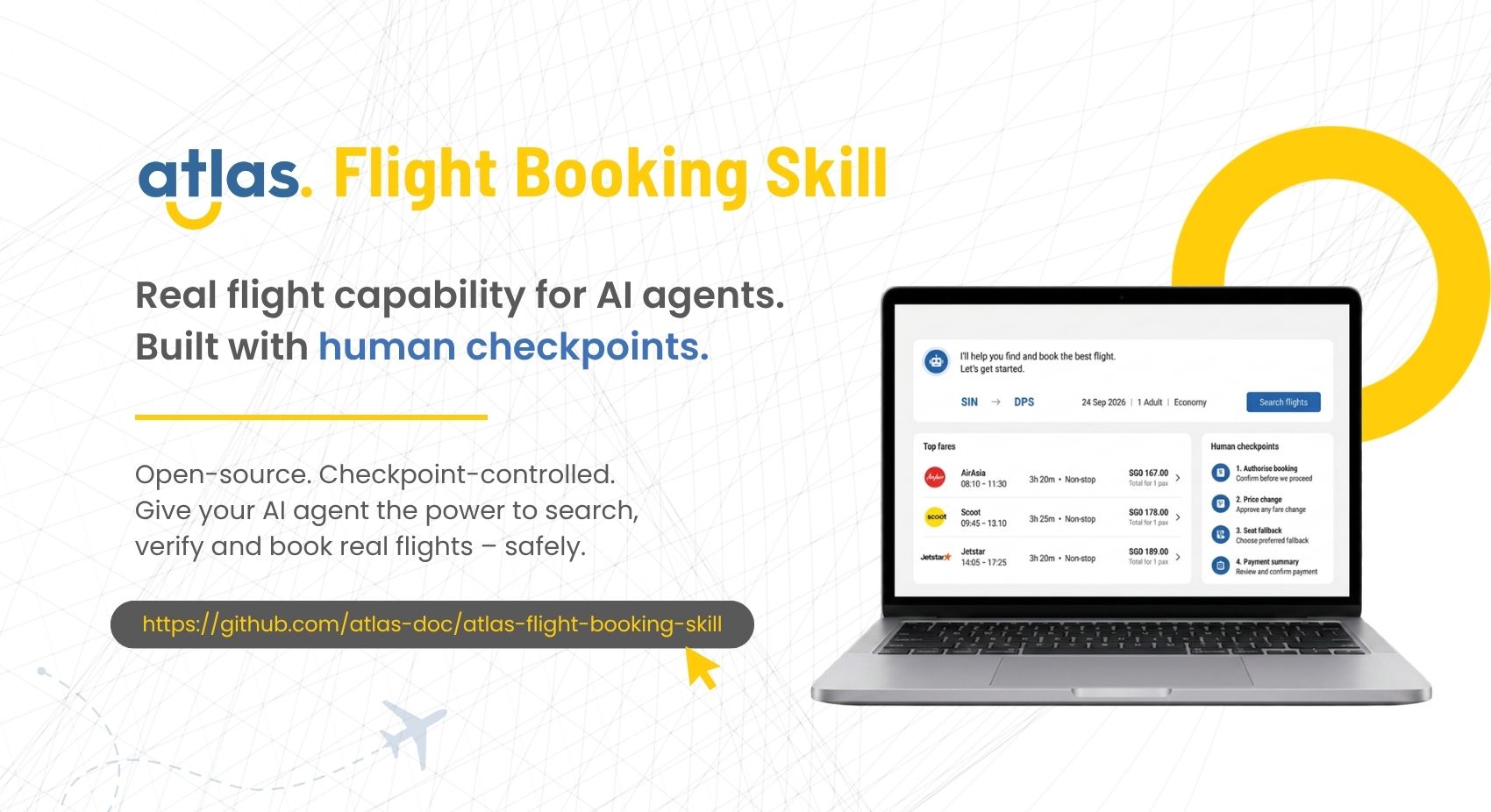
AI-native travel builders and agent developers
- What you have: An agent that needs to book across multiple airlines
- What you need: One rule set instead of managing each carrier’s API quirks, error codes, and timing constraints
- Atlas standardises this behind one interface — 140+ airlines, one integration.
Travel platforms and tech providers
- What you have: The product layer — customer experience, booking journey, workflow
- What you need: Airline execution handled so you don’t have to build it
- Bring fares from any source; Atlas issues the ticket across 140+ direct connections, with seats and baggage priced independently. Layer in Atlas Search later if you want full-stack capability.
The Three Ways to Use Atlas
Historically, customers accessed Atlas fulfilment capabilities through Search. Fulfilment API opens three distinct entry points into the platform:
Full Stack — Search → Verify → Order → Service
The complete Atlas platform. Fulfilment is included in the Search journey. The fastest path for Travel Sellers who want everything in one place.
Verify and Fulfilment (Get Offer API) — Verify → Order → Service
Source fares from your own cache, metasearch, GDS, or AI agent. Atlas verifies the fare, then handles execution. Built for Travel Sellers who own their shopping layer but want Atlas for everything after.
Order Fulfilment (Fulfilment API) — Order → Service
Pass in a confirmed order. Atlas issues the ticket. Built for Travel Sellers who’ve already committed to an order and need a reliable execution partner.
What Happens After the Ticket Is Issued
Issuing the ticket is the beginning, not the end. The Service step is the post-booking layer that keeps customers supported after confirmation: baggage add-ons, VOID within the applicable airline window, and refund workflows. For Travel Sellers managing large booking volumes, having these capabilities in the same API reduces operational overhead and simplifies the customer experience.
The Next Competitive Advantage Isn’t a Cheaper Fare
The travel industry has largely solved shopping. Fares are accessible, search is fast, comparison is commoditised. What remains unsolved — and what increasingly determines which Travel Sellers grow and which plateau — is execution.
Atlas Fulfilment API gives Travel Sellers a dedicated execution layer built for exactly this: a world where finding the flight is easy, but issuing it reliably is the last true competitive advantage.
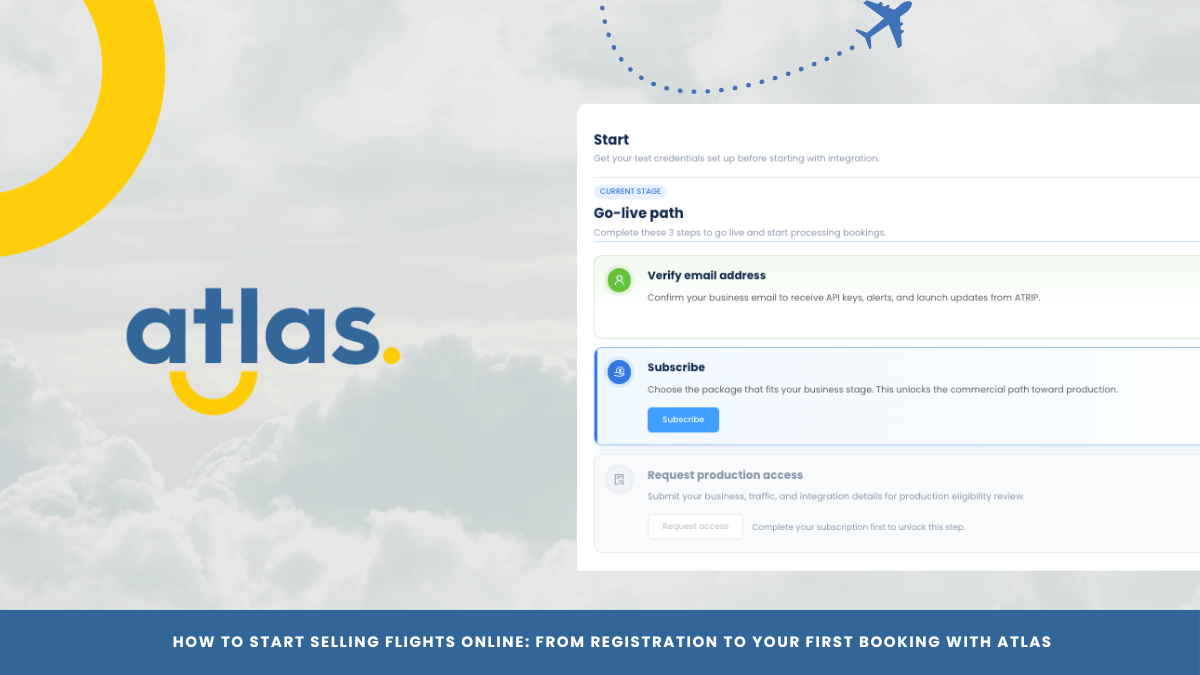
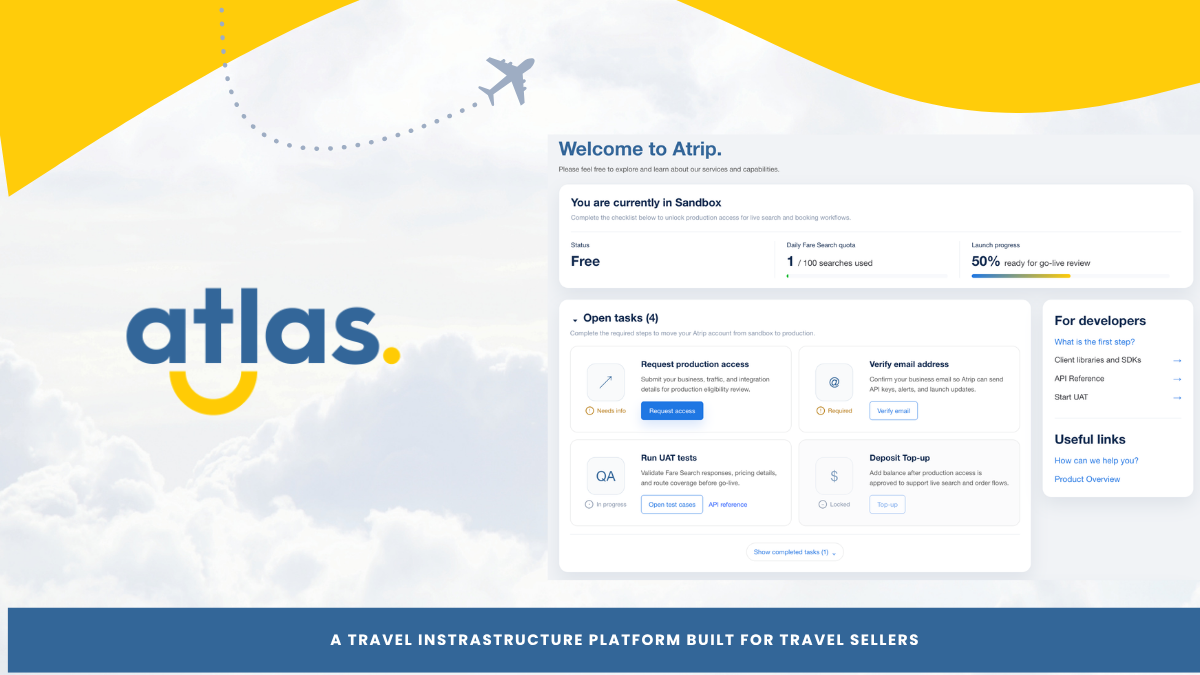
Get Started Today!
Register for free access to ATRIP in just a few seconds: https://www.atriptech.com/#/register
Want to check airline coverage first? Browse the Airline Directory at https://atlaslovestravel.com/airline-directory
Already an Atlas Travel Seller? Speak to your Account Manager about activating Fulfilment API for your account.
Frequently Asked Questions
Atlas Fulfilment API is a dedicated execution layer for ticket issuance. It handles ticket issuance automatically — completing the full flow in under five minutes, 24 hours a day. It operates independently of your search system and doesn’t require Atlas Search to use.
No. Atlas Fulfilment API works independently. Travel Sellers can bring fares from their existing shopping systems and use Atlas only for fulfilment.
Atlas Fulfilment API connects to 140+ LCCs through direct airline connections. Browse the full list at https://atlaslovestravel.com/airline-directory.
Yes. Fulfilment API supports near-departure ticketing with no advance purchase restrictions.
If a ticket can’t be issued, you’re alerted within six minutes. The alert identifies where the failure occurred so your team can respond immediately, rather than finding out when the customer contacts support.
Atlas Fulfilment API is a dedicated execution layer for ticket issuance. It handles ticket issuance automatically — completing the full flow in under five minutes, 24 hours a day. It operates independently of your search system and doesn’t require Atlas Search to use.
Most ticketing APIs are extensions of a search product, which means they share the same points of failure. Atlas Fulfilment API is a dedicated execution layer, decoupled from search and built specifically for reliable ticket issuance — with 24/7 automation, a five-minute SLA, per-airline ticketing optimisation, and six-minute failure alerting.
Yes. Atlas provides a standardised execution layer across multiple airlines, reducing the complexity of managing different airline systems and workflows. AI agents only need to learn one set of integration rules — Atlas handles the per-airline differences in the background.